English
 français
 Deutsch
 Español
 русский
 português
 日本語
日本語
Comparison Dimension | Vitamin K2 MK-4 | Vitamin K2 MK-7 |
Molecular Structure | Short-chain type (4 isoprene units) | Long-chain type (7 isoprene units) |
Main Sources | Chemical synthesis (mainstream), animal sources (dairy products, egg yolks, animal livers) | Microbial fermentation (mainly natto bacteria, mainstream for natural products), chemical synthesis (niche) |
Absorption Characteristics | Direct absorption in the upper small intestine, no need for bile salt emulsification, fast absorption rate | Absorption throughout the small intestine, requiring bile salt emulsification, slow but more complete absorption |
Bioavailability | Low, limited retention rate in the body at the same dosage | High, microgram-level dosage can reach effective plasma concentration, several times that of MK-4 |
Efficacy Duration | Half-life of 1-2 hours, rapid fluctuations in plasma concentration, requiring frequent supplementation | Half-life of 72 hours, stable plasma concentration, long-term maintenance of supportive effects |
Daily Supplementary Dosage | Milligram-level (mg), 15-45mg/day for daily maintenance | Microgram-level (μg), 100-200μg/day for daily maintenance |
Supplementation Frequency | 2-3 times a day to maintain effective concentration | Once a day, suitable for convenient health needs |
Commercial Cost | Low cost for chemically synthesized products, excellent cost-performance ratio | Medium-high cost for fermented products (premium for natural selling points), cost of synthetic products close to MK-4 |
Stability | Moderate stability to light, heat, and oxygen, requiring encapsulation protection | Excellent stability, no special protection needed for conventional formulations, long shelf life |
Despite obvious differences, MK-4 and MK-7 share the same core physiological functions: both promote targeted calcium deposition, inhibit vascular calcium deposition, and are widely used in bone health and cardiovascular support products. They only differ in efficacy efficiency and scenario adaptability.
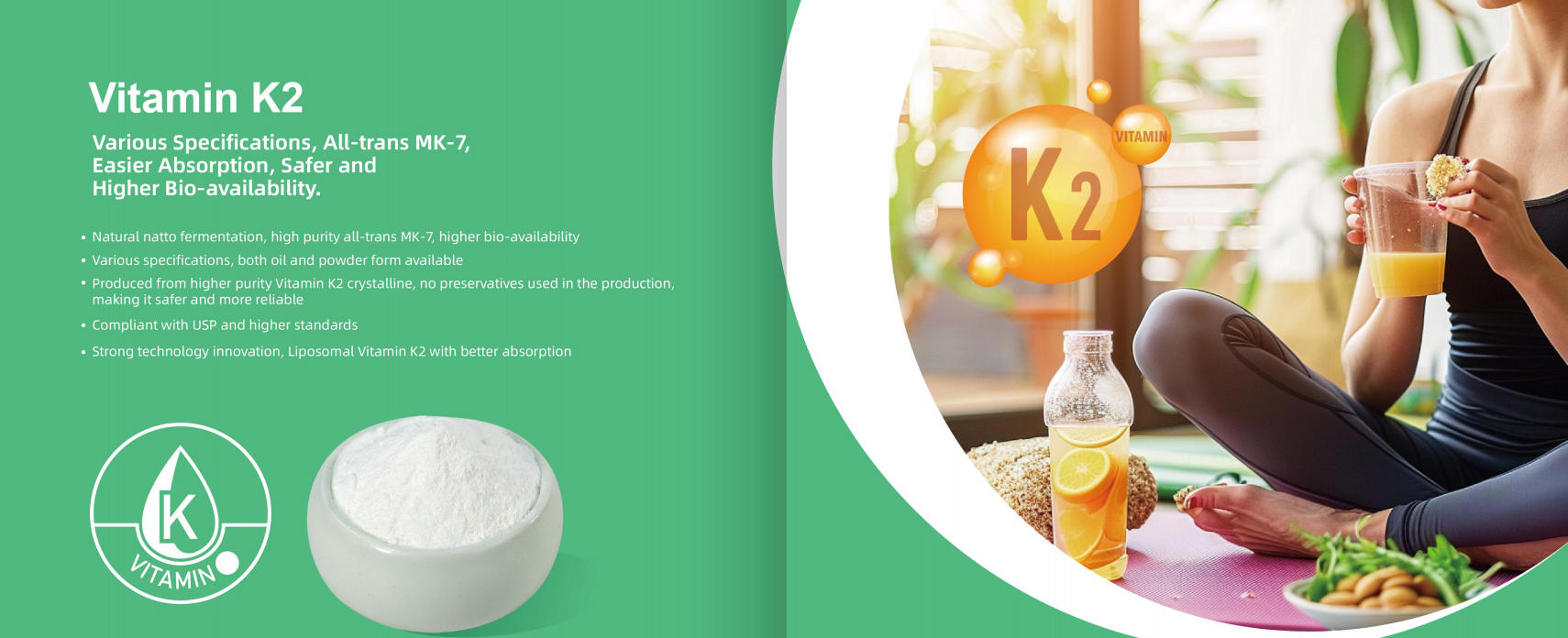
Prefer MK-4: For formulations such as oral liquids, instant powders, and uncoated chewable tablets, leverage its "fast absorption" feature to create a "rapid-acting support" selling point; also suitable for daily multi-dose sachet and packaged products, controlling pricing with low costs.
Prefer MK-7: For formulations such as hard capsules, soft capsules, and sustained-release compressed candies, highlight the convenience of "one capsule a day, long-term care" to cater to the modern lazy health trend; MK-7 is also preferred for large-volume bottled products, reducing production losses with high stability.
Prefer MK-4: People with weak gastrointestinal absorption capacity (e.g., middle-aged and elderly individuals, those with poor digestive function) – its bile salt-independent absorption avoids nutrient loss; general consumers pursuing high cost-performance, suitable for affordable products in sinking markets.
Prefer MK-7: Healthy adults aged 25+, seeking convenience for daily basic maintenance; middle-aged and elderly individuals aged 50+, in need of long-term stable nutrient supply for maintenance; high-end consumers, as the "natural natto source" selling point of fermented MK-7 is more in line with their needs; busy urban populations, as once-daily frequency reduces missed doses.
Prefer MK-4: Affordable mass-market products, focusing on "cost-effective basic maintenance" with pricing controlled at $0.3-$1.3 per bottle; gastrointestinal-friendly products, targeting the niche selling point of "suitable for weak digestive systems" to accurately cover specific needs.
Prefer MK-7: Mid-to-high-end health products, focusing on "natural fermentation, long-term care" with pricing at $2-$6.6 per bottle, suitable for the online high-end health consumer market; compound formulations (combined with calcium, vitamin D3, and magnesium), leveraging the convenience of "one dose a day" to create a "one-stop bone health solution," currently the mainstream in the market; cardiovascular support niche products, as MK-7’s long-term plasma concentration is more beneficial for daily vascular care.
Do not mismatch dosages: Do not add MK-7 at MK-4’s milligram-level dosage (wasting costs), nor add MK-4 at MK-7’s microgram-level dosage (failing to achieve maintenance effects).
Selling points must match raw materials: Products claiming "natural fermentation" must use fermented MK-7, accompanied by natto bacteria fermentation test reports to avoid false advertising.
Optimize absorption adaptability: When selecting MK-7 for products targeting the middle-aged and elderly, add bile salt extracts or prebiotics to improve absorption efficiency.
Ensure stability protection: When using MK-4 in oral liquids or liquid beverages, conduct microencapsulation treatment (e.g., cyclodextrin encapsulation) to prevent decomposition and inactivation.