English
 français
 Deutsch
 Español
 русский
 português
Glutathione (GSH), a tripeptide composed of glutamic acid, cysteine, and glycine, is widely recognized as the "master antioxidant" in the human body. It plays a pivotal role in neutralizing free radicals, supporting immune function, detoxifying harmful substances, and maintaining cellular redox balance. As the demand for glutathione supplementation grows, two primary forms have emerged on the market: conventional glutathione and liposomal glutathione.
While conventional glutathione has long been used, liposomal glutathione, equipped with advanced delivery technology, exhibits remarkable advantages that significantly enhance its efficacy. This article aims to compare these two forms and highlight the unique benefits of liposomal glutathione.
Conventional glutathione, typically available in oral forms such as tablets, capsules, or powders, faces inherent challenges that limit its bioavailability and effectiveness. Firstly, oral conventional glutathione is highly vulnerable to degradation by digestive enzymes in the stomach and intestines. The acidic environment of the stomach and proteolytic enzymes (e.g., pepsin, trypsin) can break down the peptide bonds of glutathione before it can be absorbed into the bloodstream. This means that only a small fraction of the ingested glutathione actually reaches the systemic circulation to exert its biological effects.
Secondly, even if a portion of conventional glutathione survives the digestive process, its absorption through the intestinal epithelium is inefficient. Glutathione is a relatively large molecule, and the intestinal barrier is designed to prevent the unrestricted passage of large peptides. As a result, most of the surviving glutathione remains in the gastrointestinal tract and is eventually excreted, leading to low bioavailability and suboptimal therapeutic outcomes.
Liposomal glutathione overcomes the limitations of conventional glutathione by leveraging liposomal delivery technology. Liposomes are spherical vesicles composed of phospholipid bilayers, which are structurally similar to the cell membrane. Glutathione is encapsulated within these liposomes, creating a protective barrier that revolutionizes its absorption and bioavailability. The key advantages of liposomal glutathione are as follows:
The phospholipid bilayer of liposomes acts as a physical shield, protecting the encapsulated glutathione from the harsh acidic environment of the stomach and the hydrolytic action of digestive enzymes. This protection ensures that a much higher proportion of glutathione remains intact as it passes through the gastrointestinal tract. Unlike conventional glutathione, which is easily broken down, liposomal glutathione preserves its structural integrity until it reaches the intestinal absorption site, laying the foundation for improved bioavailability.
The liposomal structure enables a more efficient absorption mechanism. Phospholipids, the main component of liposomes, are endogenous substances in the human body (e.g., components of cell membranes), making them highly biocompatible. When liposomal glutathione reaches the small intestine, the liposomes can fuse with the lipid bilayer of intestinal epithelial cells or be taken up by the cells through endocytosis. This lipid-mediated transport bypasses the traditional limitations of peptide absorption, allowing the encapsulated glutathione to be directly released into the cytoplasm of intestinal cells and then into the systemic circulation. Studies have shown that liposomal glutathione can achieve significantly higher blood concentrations of glutathione compared to conventional forms, even at the same dosage.
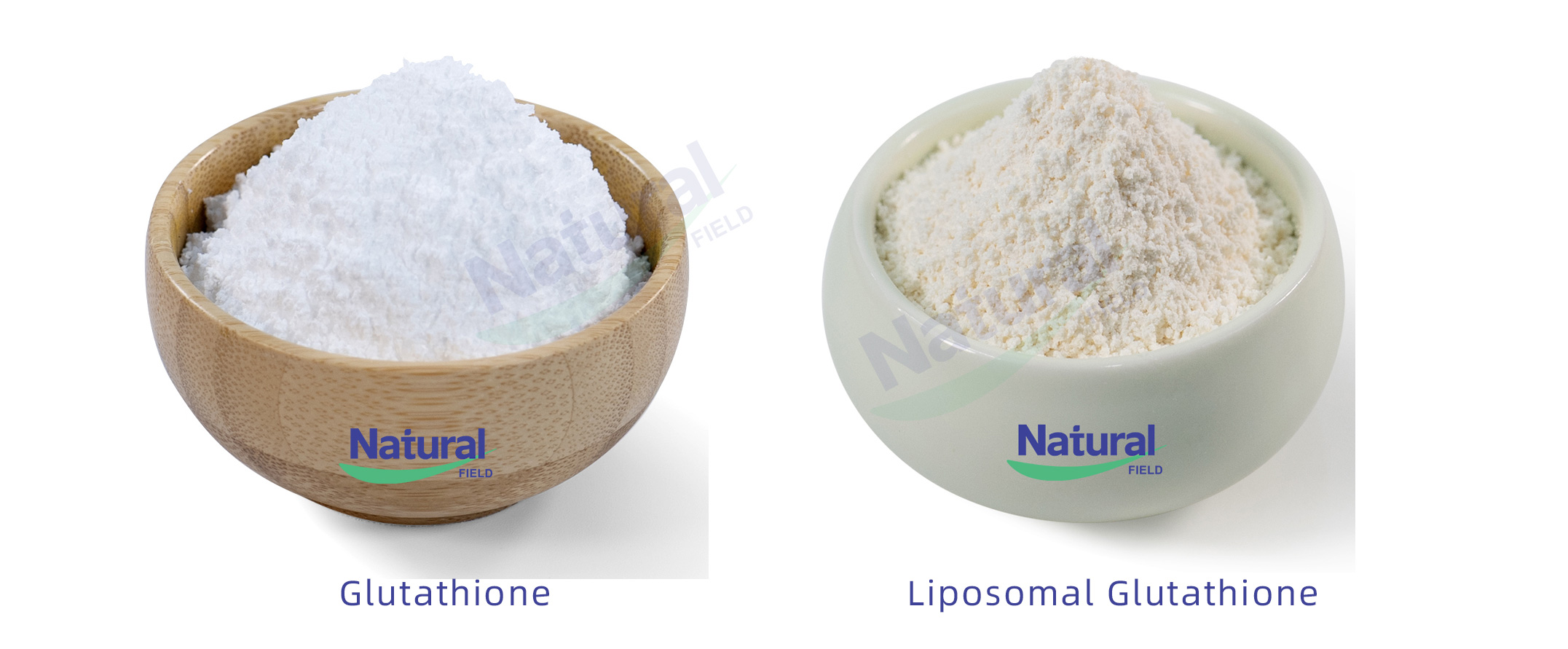
Another notable advantage of liposomal glutathione from the professional glutathione powder supplier is its potential for targeted delivery. Liposomes can be engineered to have specific surface properties, enabling them to accumulate in specific tissues or cells that require glutathione supplementation (e.g., liver cells, immune cells). This targeted delivery not only enhances the concentration of glutathione at the site of action but also reduces potential side effects by minimizing unnecessary distribution in non-target tissues. For example, in liver detoxification processes, liposomal glutathione can be more effectively delivered to hepatocytes, where it plays a critical role in neutralizing toxins and protecting liver function.
Liposomal glutathione exhibits a sustained release profile, which ensures a steady supply of glutathione in the body over an extended period. After absorption into the bloodstream, the liposomes gradually degrade and release glutathione, avoiding the rapid peak and subsequent decline in blood concentrations observed with conventional glutathione. This sustained release allows glutathione to maintain its antioxidant and detoxifying effects for a longer time, providing more stable and consistent physiological benefits.
Due to its high bioavailability, liposomal glutathione can achieve the desired therapeutic effects at lower dosages compared to conventional glutathione. This lower dosage requirement reduces the risk of potential side effects (e.g., gastrointestinal discomfort, nausea) that may occur with high-dose conventional glutathione supplementation. Additionally, the phospholipid components of liposomes are biocompatible and biodegradable, posing minimal risk of adverse reactions, making liposomal glutathione a safer option for long-term use.
While conventional glutathione is a well-known antioxidant, its poor bioavailability and susceptibility to digestive degradation limit its effectiveness. Liposomal glutathione, by virtue of its unique liposomal delivery system, addresses these limitations and offers multiple advantages, including enhanced bioavailability, efficient intestinal absorption, targeted delivery, sustained release, and improved safety.
These benefits make liposomal glutathione from Natural Field a superior choice for individuals seeking to supplement glutathione to support antioxidant defense, detoxification, immune function, and overall cellular health. As delivery technology continues to advance, liposomal glutathione is poised to become the preferred form of glutathione supplementation in both clinical and consumer settings.